
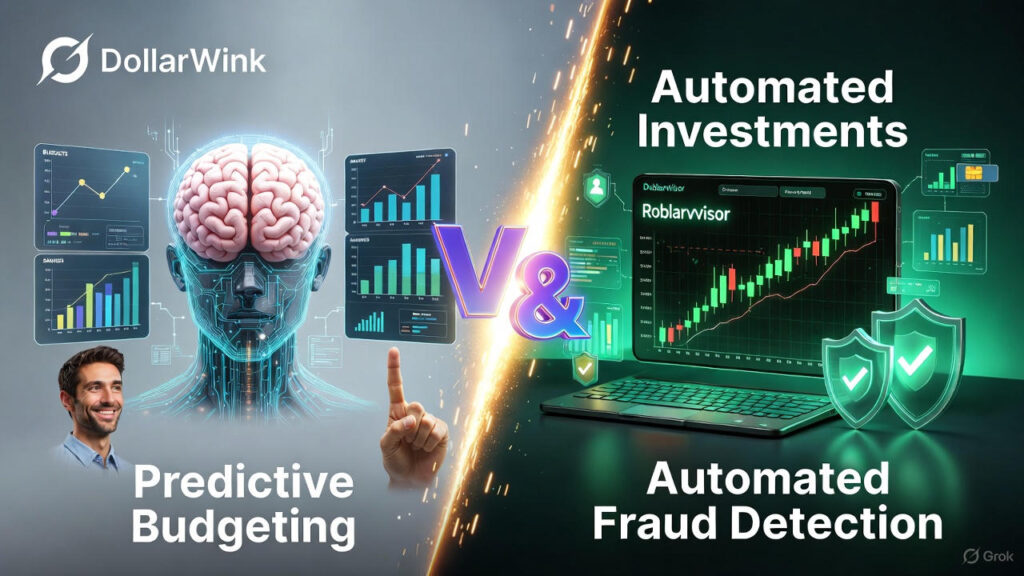
Artificial Intelligence isn’t just a tech buzzword — it’s quietly revolutionizing how Americans manage their money. From predictive budgeting apps to robo-advisors fine-tuning investment strategies, 2025 marks the year AI goes mainstream in personal finance.
For early adopters, the benefits are tangible: smarter saving, fewer costly mistakes, and more control over cash flow. But even for those skeptical of AI, ignoring these tools could mean missing out on one of the biggest financial shifts in decades.
📊 Top Ways AI Is Changing Personal Finance in 2025
1️⃣ Predictive Budgeting
AI-powered apps can now track spending patterns in real-time and predict future expenses. For example, if your utilities usually spike in winter, predictive budgeting apps alert you beforehand, helping avoid overdraft fees or last-minute debt.
💡 Tip: Tools like Cleo, YNAB AI features, or Mint’s AI assistant are already showing users potential overspending before it happens.
2️⃣ Automated Savings
Gone are the days of manually transferring money to a savings account. AI can analyze your paycheck, spending habits, and upcoming bills to automatically allocate funds to savings or emergency accounts.
📈 A recent 2025 survey showed that Americans using automated savings AI increased their monthly savings by an average of 12–18%.
3️⃣ Investment Advice on Autopilot
Robo-advisors like Betterment or Wealthfront now leverage AI to rebalance portfolios dynamically, adjust for risk, and even identify market trends. Investors no longer need to monitor stocks every day — AI algorithms do the heavy lifting.
4️⃣ Fraud Detection and Security
AI doesn’t just manage money — it protects it. Real-time transaction monitoring identifies suspicious activity faster than any human. One 2025 study reported a 30% drop in fraud losses for households using AI-enhanced financial monitoring.
5️⃣ Smart Bill Negotiation
Some AI tools now automatically search for cheaper utility providers, subscription alternatives, and better rates on services. The average American household saves $500–$800 annually by letting AI handle negotiations and cancellations.
💹 Why This Matters
Manual money management is increasingly outdated. Rising inflation, subscription creep, and mounting debt make intelligent assistance crucial. AI offers:
✔ Reduced unnecessary spending — alerts and predictions prevent overspending.
✔ Automated long-term savings — builds wealth without thinking.
✔ Protection against financial risks — fraud detection and smart alerts.
✔ Optimized investment efficiency — portfolio adjustments based on real data.
In 2025, AI is not a luxury — it’s becoming a standard tool for financial survival and growth.
🧠 Common Pitfalls to Avoid
While AI can be transformative, it’s not perfect. Users should avoid:
- Blindly trusting every recommendation
- Ignoring privacy settings
- Over-relying on AI without understanding their finances
Smart usage means combining human judgment with AI insights, not replacing one with the other.
🧭 The Wink Take
AI personal finance is a powerful ally, not a replacement.
Americans who adopt these tools early can:
- Stay ahead of market trends in savings and investing
- Spot financial red flags before they spiral
- Reduce stress and free time spent on money management
- Achieve long-term financial growth with minimal effort
The question isn’t if AI will change personal finances — it’s how fast you will adapt.
🔗 Read Next on DollarWink
👉 https://dollarwink.com/investments-that-survive-crashes-2025/