The phrase “Fed divisions impact” is rarely looked at as a headline — but it should be.
When Federal Reserve policymakers don’t agree, markets pay attention …and your portfolio can feel the tremors.
What’s going on?
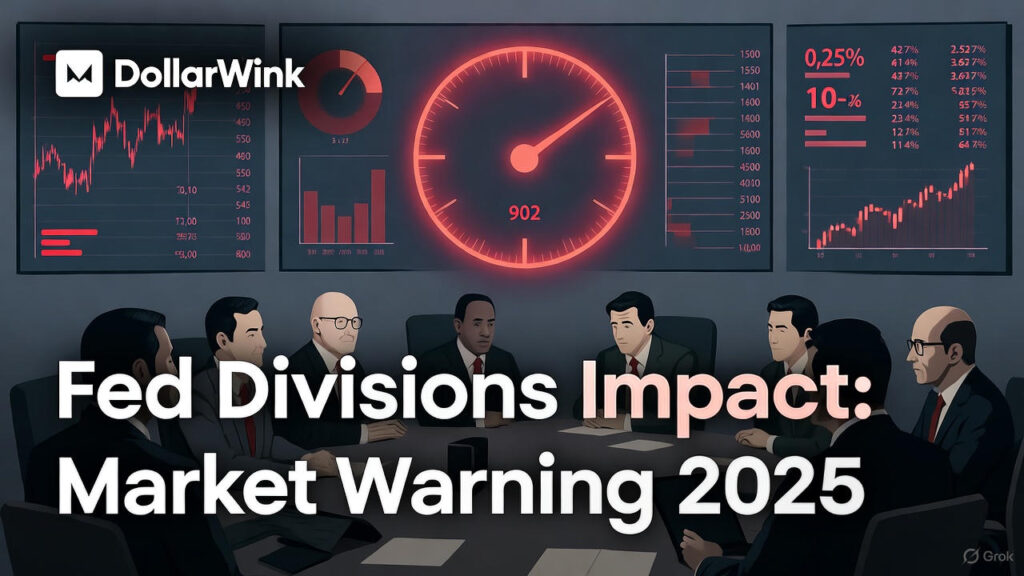
In the recent meeting, the Fed cut its benchmark rate by just 0.25 percentage points to a range of 3.75–4.00%.
But here’s the kicker: the vote wasn’t unanimous. A 10-2 split emerged, with one member pushing for a 0.50% cut, and another voting to hold rates steady.
That kind of dissension hasn’t been common — and it signals uncertainty about what’s next.
Why it matters for markets
- Interest-rate expectations go wobbly: When the Fed signals “we’re divided,” the certainty about future cuts or hikes goes out the window.
- Stocks hate uncertainty: Equity valuations, especially in high-growth sectors, depend on stable policy. Wobbly Fed = shaky valuations.
- Bond yields shift: With confusion at the Fed, bond markets reprice risk — pushing yields up and borrowing costs higher.
- The dollar benefits: A divided Fed that hints at fewer cuts often means a stronger dollar, which hurts U.S. exporters and global earnings.
What investors should do now
- Re-assess your interest-rate exposure. If you’re heavy in rate-sensitive sectors (like real estate or utilities), now might be the time to check your risk.
- Focus on quality. Companies with strong balance sheets and cash flows often fare better when policy uncertainty rises.
- Watch the 10-year Treasury. When the Fed is split, yields tend to move more violently — that impacts everything from mortgages to valuations.
- Stay nimble and data-driven. With the narrative shifting fast, stay updated on inflation, job growth and Fed commentary.
The bottom line
The Fed divisions impact isn’t just a headline for economists — it’s a wake-up call for investors.
A central bank that’s unsure of its next move creates ripple effects: markets struggle, valuations wobble and risk rises.
If you’re prepared with a strong plan, good quality assets and diversification, you’ll be better positioned when the Fed finally finds its consensus.
For more on market signals and how to position your portfolio ahead of major shifts, check out our previous article:
➡️ Tech Bubble Warning: Wall Street Sounds Alarm on Market 2025