
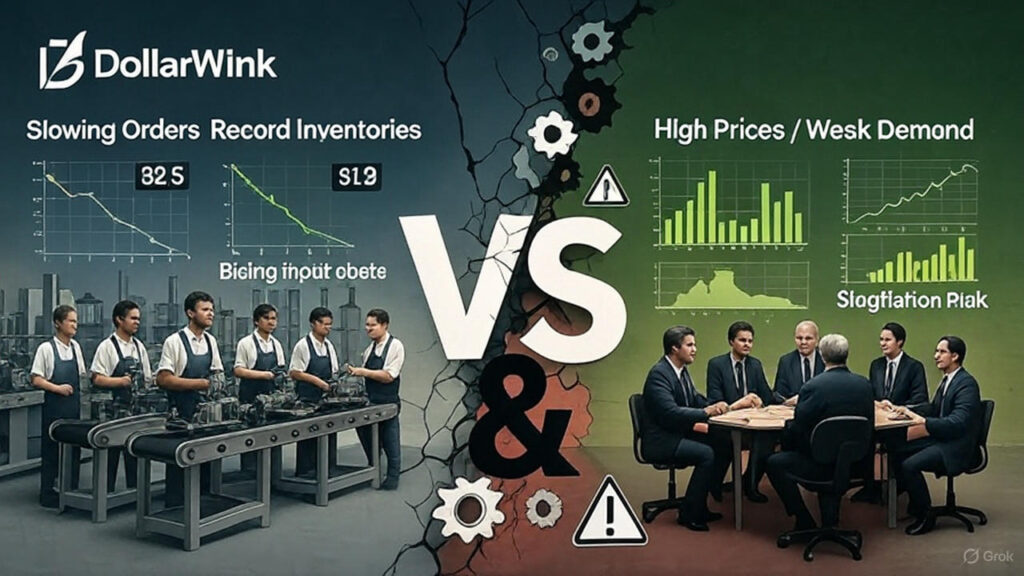
U.S. manufacturing slows again as fresh economic data from the last 24 hours points to weakening factory output and softer new orders. The latest report shows that demand is cooling faster than expected, raising concerns about growth momentum heading into the next quarter.
Even more alarming: the measure for new orders plunged, while finished-goods inventories surged to a record high.
📉 Demand Is Cooling, Costs Are Rising
Here’s what’s happening behind the headline number:
- Factories reported a sharp drop in new orders, falling from 54.0 to 51.3.
- Meanwhile, the inventory index hit its highest level ever in the survey’s history. That spells trouble: when orders drop but stock piles up, production often heads downward.
- Inflation remains sticky: input-cost and output-price gauges rose, signalling that factories are still paying more — yet customers are buying less.
- High import tariffs are shown to be part of the story. They’re driving up costs and eroding consumer budgets, which weakens demand for manufactured goods.
🏗️ What This Means for the Broader Economy
Manufacturing accounts for about 10% of U.S. economic output — so this slowdown shouldn’t be ignored.
Here are the potential ripple effects:
- With fewer new orders and rising inventories, factories may cut back production, which could lead into job losses or hiring slowdowns.
- A weaker manufacturing sector might drag on service-sector growth, despite recent resilience.
- Sticky costs + weaker demand could lead to inflation-growth stagflation pressure.
- The weakness may reduce the odds of aggressive monetary easing by the Federal Reserve, since inflation risks remain.
⚠️ What’s Next — The Risk Outlook
- If orders don’t rebound, look for the PMI to slip further — potentially below 50, which would indicate actual contraction.
- Watch for manufacturing employment data: softening here would be another red flag.
- Monitor inventories: if stockpiles continue to grow without orders, firms may be forced into price discounts or writes-off inventory, either of which hurts margins.
- Keep an eye on consumer sentiment and spending: if inflation + cost pressure keeps households on the sidelines, businesses will feel the pinch.
🧭 The Wink Take
The U.S. factory engine is sputtering. With the headline number still above 50, it’s not a crash — yet. But the combo of slowing orders, record inventories and rising costs could quickly turn into a sharper slowdown. The risk? Growth stalls, inflation remains, and rate cut hopes shrink. Markets better keep this one in their sights.
🔗 Read Next on DollarWink
👉 https://dollarwink.com/investments-that-survive-crashes-2025/